
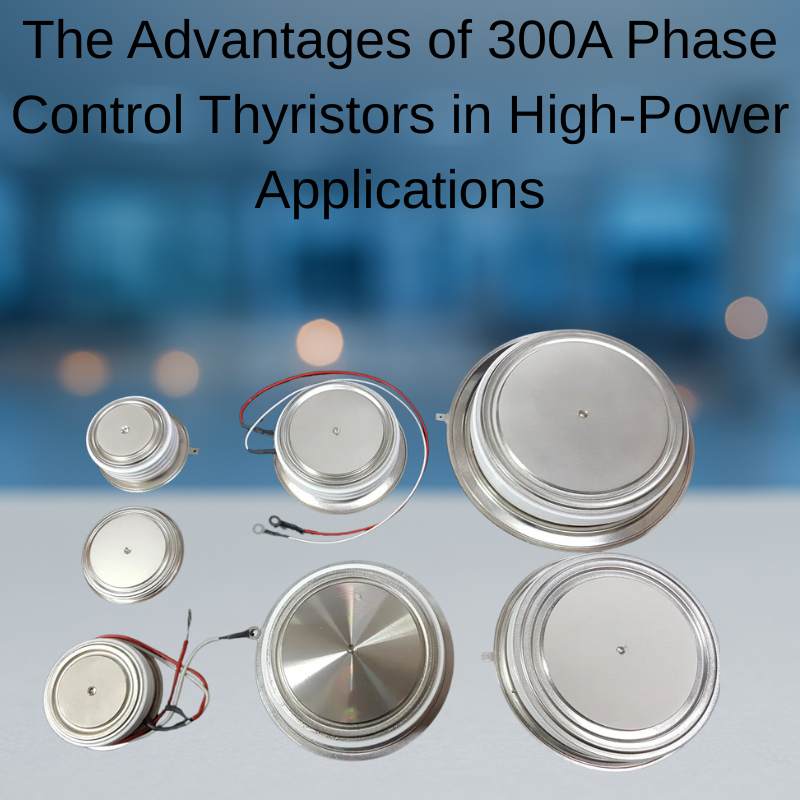
The Advantages of 300A Phase Control Thyristors in High-Power Applications
The use of phase control thyristors in industrial power systems has become increasingly important due to the demand for precise and efficient regulation of electrical power. The 300A phase control thyristor is one such component that plays a vital role in managing high-power applications. This article discusses the key features and benefits of the 300A phase control thyristor, including its high thermal stability, high surge current rating, and low on-state voltage drop, and how they contribute to the efficiency and reliability of industrial systems.
What Makes the 300A Phase Control Thyristor Essential for Industrial Applications?
A 300A phase control thyristor is a semiconductor device designed to regulate the flow of electrical current in high-power systems. These thyristors are used in a variety of industrial applications, including motor drives, battery chargers, and power converters, where the ability to control high current levels is crucial. The 300A phase control thyristor can handle up to 300 amps of current, making it ideal for demanding applications that require precise power regulation.
Phase control thyristors work by switching on and off at specific intervals, allowing them to regulate the amount of current flowing through a circuit. This enables them to manage the power supplied to critical components such as motors and batteries, ensuring that they operate efficiently and reliably.
High Thermal Stability for Reliable Operation
One of the most significant features of the 300A phase control thyristor is its high thermal stability, which is essential in industrial applications where the system must operate continuously without failure. In high-power systems, heat buildup can be a significant concern, as excessive heat can damage sensitive components and cause system instability.
The high thermal stability of the 300A phase control thyristor ensures that it can handle temperature fluctuations without compromising its performance. This is especially important in systems such as AC load voltage regulation, where the thyristor is exposed to varying electrical loads and environmental conditions. The ability to maintain stable performance despite temperature changes allows the thyristor to continue regulating power effectively without overheating, improving system reliability and extending the lifespan of the device.
In industrial systems, high thermal stability also reduces the risk of thermal stress, which could lead to premature failure or degradation of components. The 300A phase control thyristor’s ability to maintain consistent performance, even under heavy load conditions, ensures that the system operates smoothly over long periods, reducing maintenance needs and downtime.
High Surge Current Rating for Electro-Chemical Processing Equipment
Another key feature of the 300A phase control thyristor is its high surge current rating. Surge currents are brief spikes in current that can occur in industrial power systems, especially in applications such as electro-chemical processing or motor starting. These spikes can be damaging to sensitive components if not properly managed.
The high surge current rating of the 300A phase control thyristor makes it well-suited for handling these sudden surges without causing damage to the system. In electro-chemical processing, for example, the thyristor must be able to withstand rapid fluctuations in current without failure. By handling high surge currents effectively, the thyristor helps maintain the integrity of the system, ensuring that power delivery remains stable and uninterrupted during dynamic conditions.
Low On-State Voltage Drop for Energy Efficiency
Energy efficiency is a critical concern in high-power industrial systems, as energy costs continue to rise, and the demand for sustainable solutions increases. The low on-state voltage drop of the 300A phase control thyristor helps improve the overall efficiency of the system by minimizing energy loss during operation.
When the thyristor is in its on state, conducting electricity, the on-state voltage drop refers to the voltage loss across the thyristor as the current flows through it. A low on-state voltage drop ensures that minimal energy is lost in the process, which translates into lower operational costs and improved efficiency.
In high-power applications, where large amounts of current are being regulated, even small reductions in voltage loss can have a significant impact on overall system efficiency. The 300A phase control thyristor’s low on-state voltage drop ensures that energy loss is minimized, helping reduce the carbon footprint of the system and making it more environmentally friendly.
Conclusion: The Versatility of 300A Phase Control Thyristors in Industrial Power Systems
The 300A phase control thyristor is a highly versatile and efficient component that plays a crucial role in regulating power in high-power industrial applications. Its high thermal stability, high surge current rating, and low on-state voltage drop make it an ideal solution for systems that require precise power regulation, such as AC load voltage regulation, electro-chemical processing, and battery charging systems.
By using the 300A phase control thyristor in industrial systems, businesses can optimize their power control systems, improving energy efficiency, reducing downtime, and extending the lifespan of their equipment. Whether for voltage regulation, surge current management, or energy efficiency, the 300A phase control thyristor is an essential component in modern industrial power systems.
READ MORE:
MOQ Considerations and Performance Benefits of 300A Phase Control Thyristors
Low On-State Voltage Drop in 300A Phase Control Thyristors for Efficient Energy Use
Enhancing Industrial Power Systems with 300A Phase Control Thyristors
Maximizing Performance with the 300A Phase Control Thyristor in Motor Control and Energy Systems
High Surge Current Rating of 300A Phase Control Thyristors for Electro-Chemical Processing
Optimizing Power Control with 300A Phase Control Thyristors: Key Features and Applications
Understanding the Role of the 300A Phase Control Thyristor in Industrial Power Systems